Alexander Andriatis
I'm a postdoctoral researcher in the Environmental Dynamics Laboratory at MIT, where I study ocean turbulence and particle transport. My current work supports understanding the efficacy of marine carbon dioxide removal and the environmental impacts of deep-sea mining. My research spans observational field campaigns using novel instruments, lab studies, and numerical modeling.
I am also a passionate decarbonization advocate and enjoy thinking about solutions for the clean energy transition.
If you'd like to get in touch, send me an email.
See my lab at MIT
Visit my LinkedIn Profile
Projects
Mixing and Dilution in Marine Carbon Dioxide Removal
Marine carbon dioxide removal (mCDR) interventions such as direct ocean capture and ocean alkalinity enhancement release water with lowered pCO2 into the ocean, where turbulence mixes and dilutes it while the surface takes up carbon dioxide from the atmosphere. Current monitoring, reporting, and verification approaches rely on regional-scale models that make broad assumptions about this near-field behavior. We ask what the simplest model of an intervention can tell us, and what should be measured in the near field to make those assumptions trustworthy.
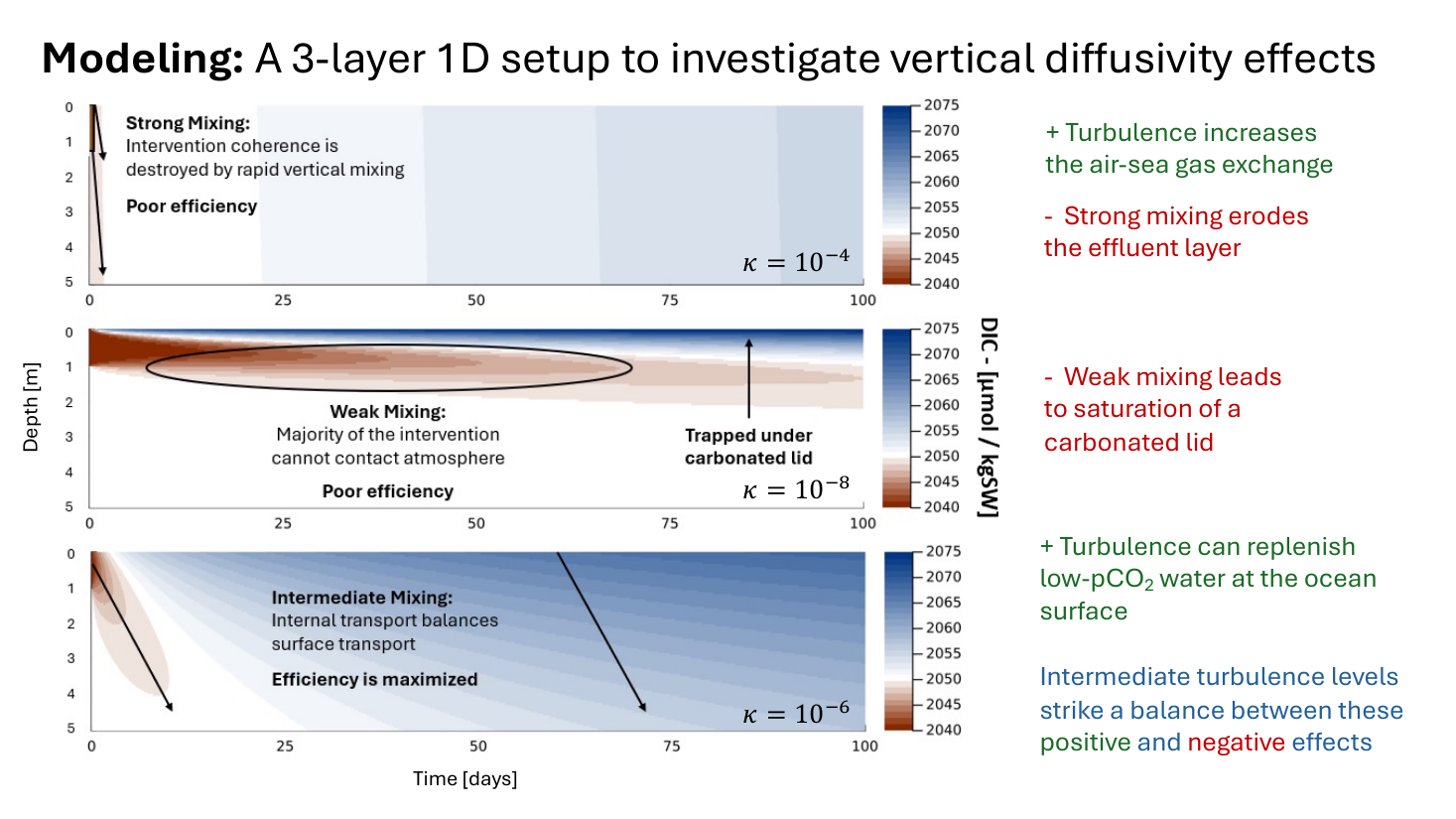
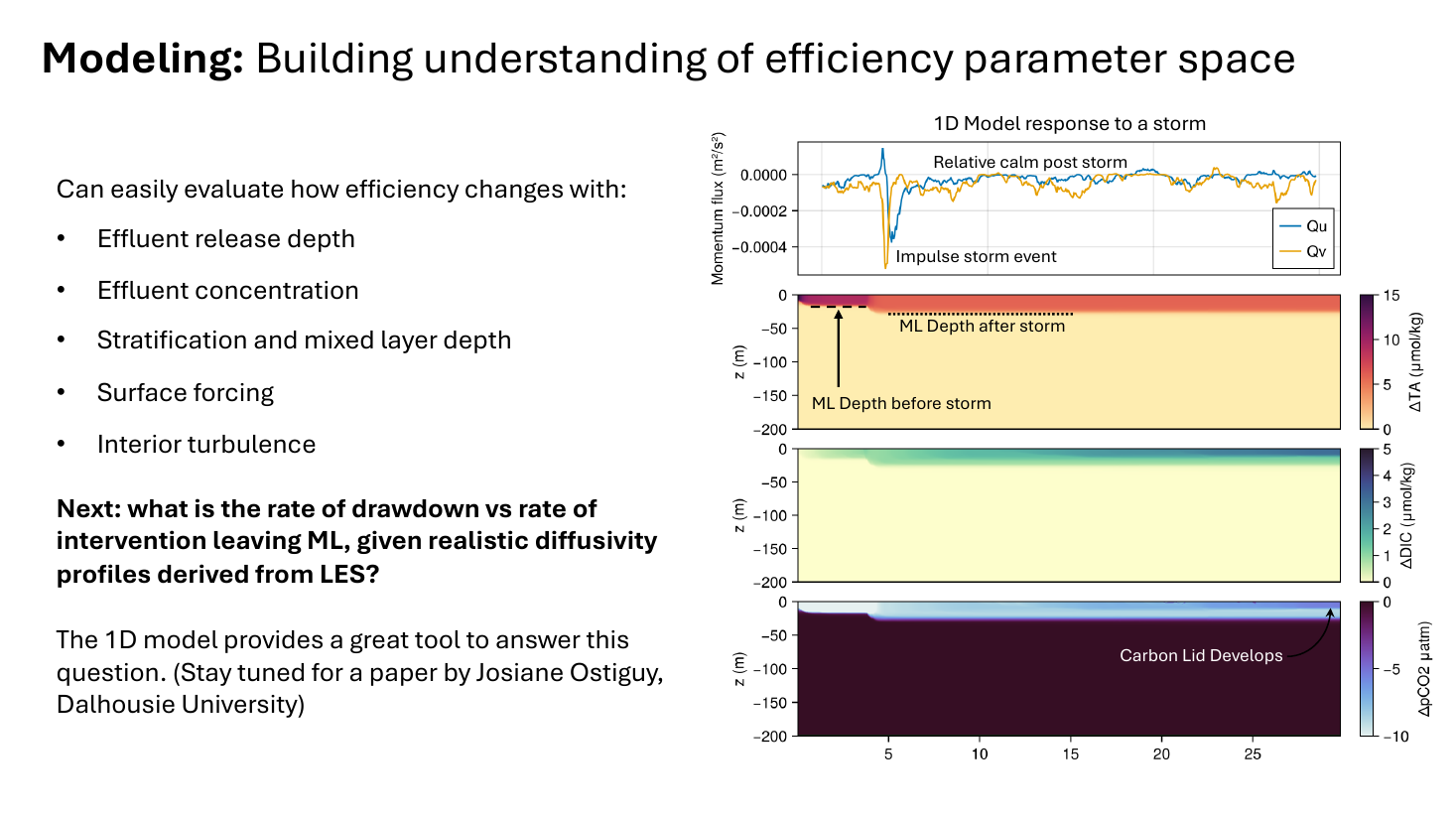
We built a reduced-complexity one-dimensional model that couples vertical diffusion of dissolved inorganic carbon and alkalinity with the carbonate system and air-sea gas exchange. In a three-layer setup, vertical mixing has a leading-order effect on efficiency: turbulence increases air-sea exchange and replenishes low-pCO2 water at the surface, but strong mixing erodes the effluent layer, while weak mixing saturates a carbonated lid at the surface. Intermediate turbulence strikes a balance between these effects. The model makes it easy to explore how efficiency depends on release depth, effluent concentration, stratification, surface forcing, and a storm.
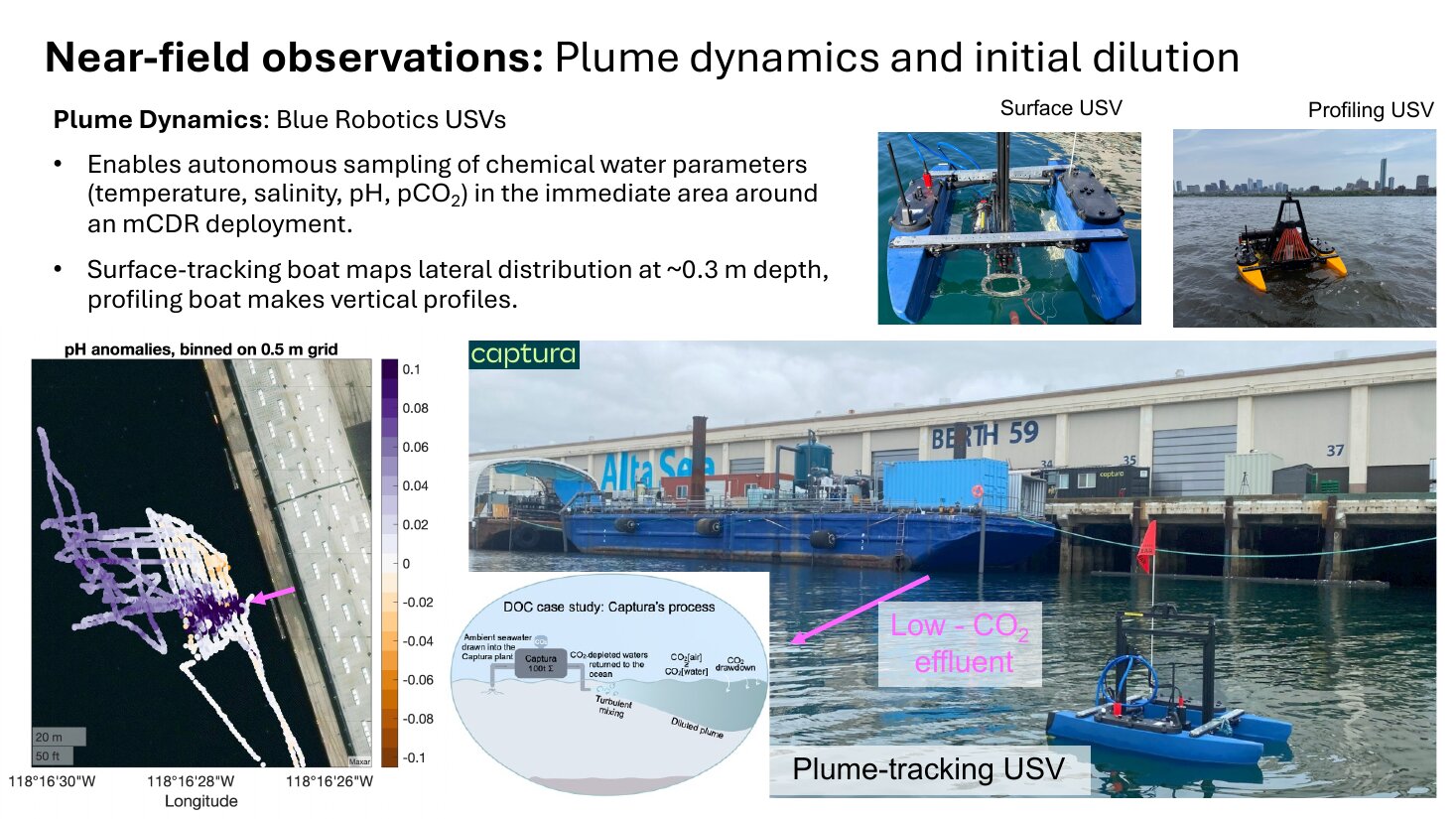
Informed by the model, we are developing a near-field observing system: autonomous surface vehicles that map the lateral and vertical distribution of temperature, salinity, pH, and pCO2 around an intervention, an upward-looking high-resolution ADCP for turbulence, and the RTSSV particle camera for alkaline particle properties. At a direct ocean capture trial we characterized the pH anomaly of the low-pCO2 effluent plume as it evolved from a momentum-driven near field to an advective far field.
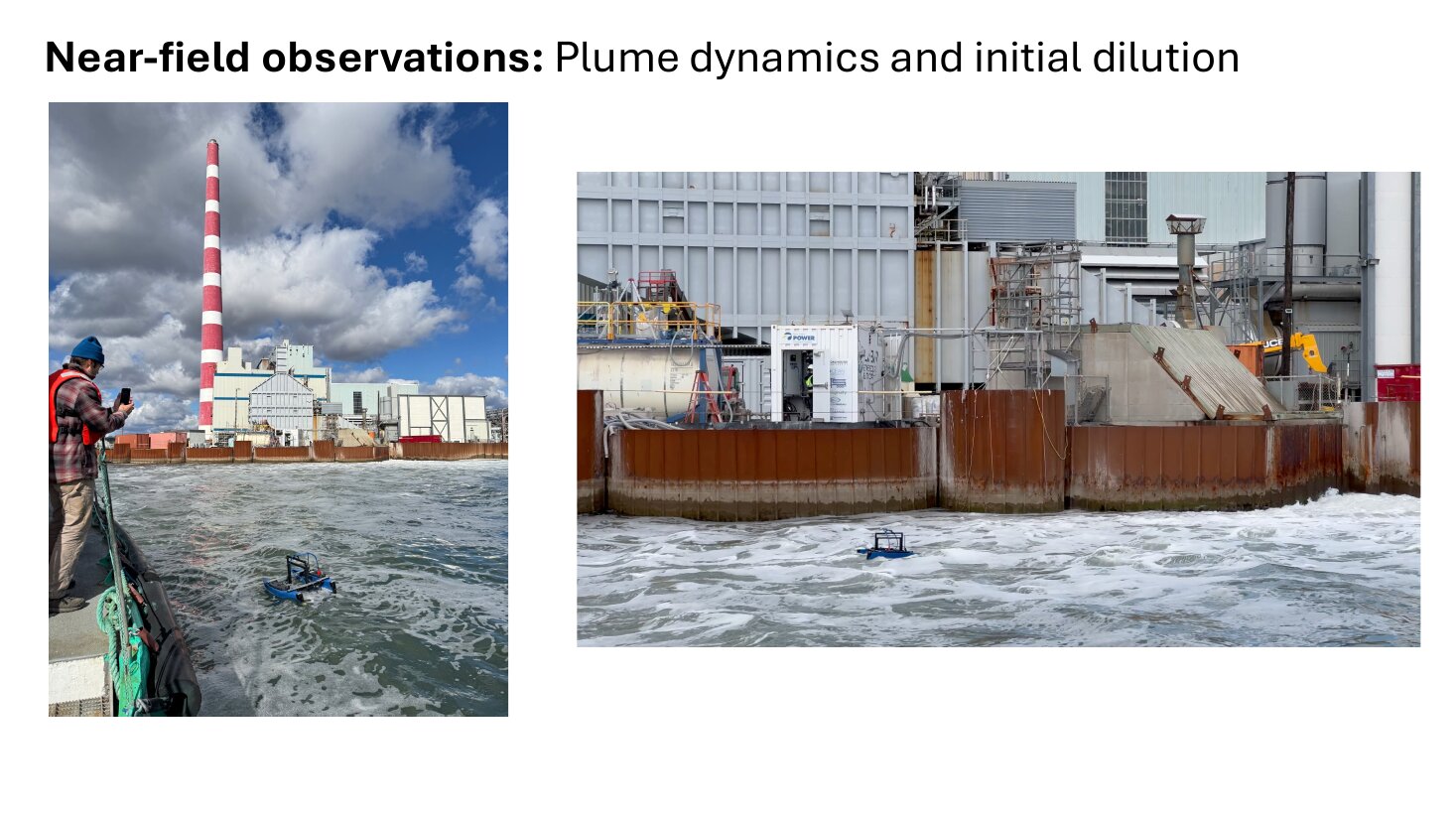
This work is a collaboration with the MIT Marine Autonomy Lab and Dalhousie University, supported by the MIT Energy Initiative.
Presentations
Andriatis, A., et al.: Assessing the impact of vertical mixing and dilution in plume-discharge mCDR interventions via a 1-D semi-analytic model. Goldschmidt Conference, July 2025.
Andriatis, A., I. Stokes, S. El Mousadik, T. Peacock, R. Musgrave, and J. Ostiguy: Developing trustworthy MRV for mCDR: modeling and observational approaches to constrain mixing effects on mCDR intervention efficiency. Gordon Research Seminar on Ocean Mixing, June 2026.
Andriatis, A.: Developing trustworthy MRV for mCDR. MIT Mechanical Engineering iMMEC Seminar Series, April 2026.